%20(1).png)


What Happens During a Professional Golf Club Regripping | Michiana Club Repair
- Kelly & Stephen Sanderson

- Dec 20, 2025
- 2 min read
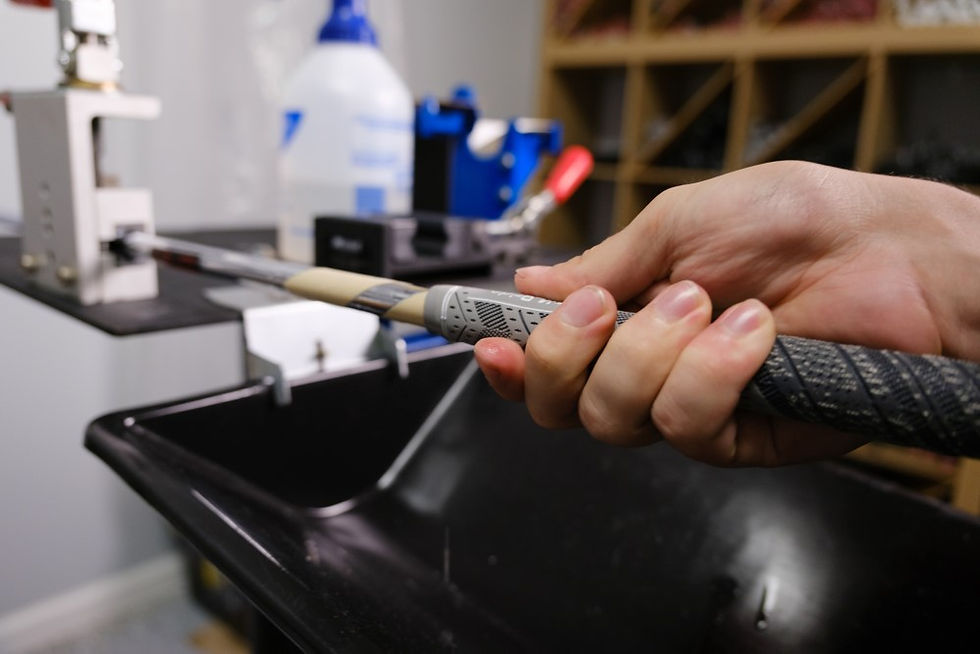
Many golfers know their grips are worn out — slick, cracked, or uncomfortable — but they’re not always sure what actually happens when clubs are professionally regripped. While regripping may seem simple, doing it correctly requires precision, experience, and attention to detail.
Here’s a behind-the-scenes look at what happens during a professional golf club regripping and why it makes a difference.
Step 1: Evaluating Your Current Grips
Before any work begins, your clubs are evaluated to determine:
Grip condition and wear patterns
Current grip size
Shaft type (steel or graphite)
Any buildup tape or custom sizing already in place
This step helps identify whether you should simply replace grips or adjust grip size, tape layers, or grip style to better suit your game.
Step 2: Removing the Old Grips Safely
Old grips are carefully removed using proper cutting techniques. This is especially important with graphite shafts, which can be damaged if cut incorrectly.
Professional regripping ensures:
No shaft damage
Clean removal without residue issues
Preservation of shaft integrity
DIY mistakes at this stage can permanently damage clubs — one of the biggest reasons golfers choose professional service.
Step 3: Cleaning the Shaft Thoroughly
Once the grip is removed, all old tape and adhesive residue are stripped from the shaft.
This step is critical because:
Residue affects grip adhesion
Uneven tape leads to inconsistent grip feel
Clean shafts ensure long-lasting results
Skipping or rushing this step often leads to twisting grips or premature failure.
Step 4: Building the Correct Grip Size
Grip size isn’t one-size-fits-all. During professional regripping, grip size can be customized using:
Additional tape layers
Reduced or standard builds
Midsize or jumbo grips
This customization ensures proper hand fit, comfort, and control — something off-the-shelf clubs rarely provide.
Step 5: Installing the New Grip
The new grip is installed using professional solvent and alignment techniques to ensure:
Correct face alignment
Consistent logo placement
Proper grip depth and seating
Even slight misalignment can affect ball flight and consistency, especially with irons and wedges.
Step 6: Final Inspection & Quality Check
Before clubs are returned, each grip is inspected for:
Proper alignment
Secure adhesion
Consistent sizing across the set
Clubs are allowed to cure properly so they’re ready for play without slipping or twisting.
Why Professional Golf Club Regripping Matters
While regripping at home may seem tempting, professional service offers:
Correct sizing and customization
Protection of shafts
Consistent alignment
Longer-lasting results
Expert recommendations based on your swing
For most golfers, professional regripping is a small investment with immediate performance benefits.
How Often Should You Regrip?
Most golfers should regrip:
Every 50 rounds
Or once per season
More often if playing frequently or in humid conditions
If your grips feel slick or uncomfortable, it’s probably time.
Final Thoughts
Professional golf club regripping isn’t just about replacing old grips, it’s about making sure your clubs feel right in your hands and perform the way they should.
If you’ve never had your clubs professionally regripped, you may be surprised how much of a difference it makes.
📞 Ready to Regrip Your Clubs?
Call or text 574-409-2813 or email michianaclubrepair.com. You can also send in an inquiry here. Be sure to follow @michianaclubrepair on Instagram and Facebook for the latest news and behind-the-scenes looks at club repair!


Comments